Electrical · Fire · Security
Solar Panel Installationin Caldicot, Chepstowand across Monmouthshire
A system sized on the electricity you actually use, surveyed free, quoted in writing within 7 days, and fitted by the same person who surveyed it.
16+ years’ experience · Free survey · Written quote within 7 days · Available 24 hours a day, 365 days a year
16+ years
hands-on electrical and solar experience
24/7, 365
available every day of the year
Free survey
written quote back within 7 days
Fully insured
owner-led work, tested and certificated
Reviewed locally
rated by customers across Monmouthshire
What solar PV installation involves, and who it suits
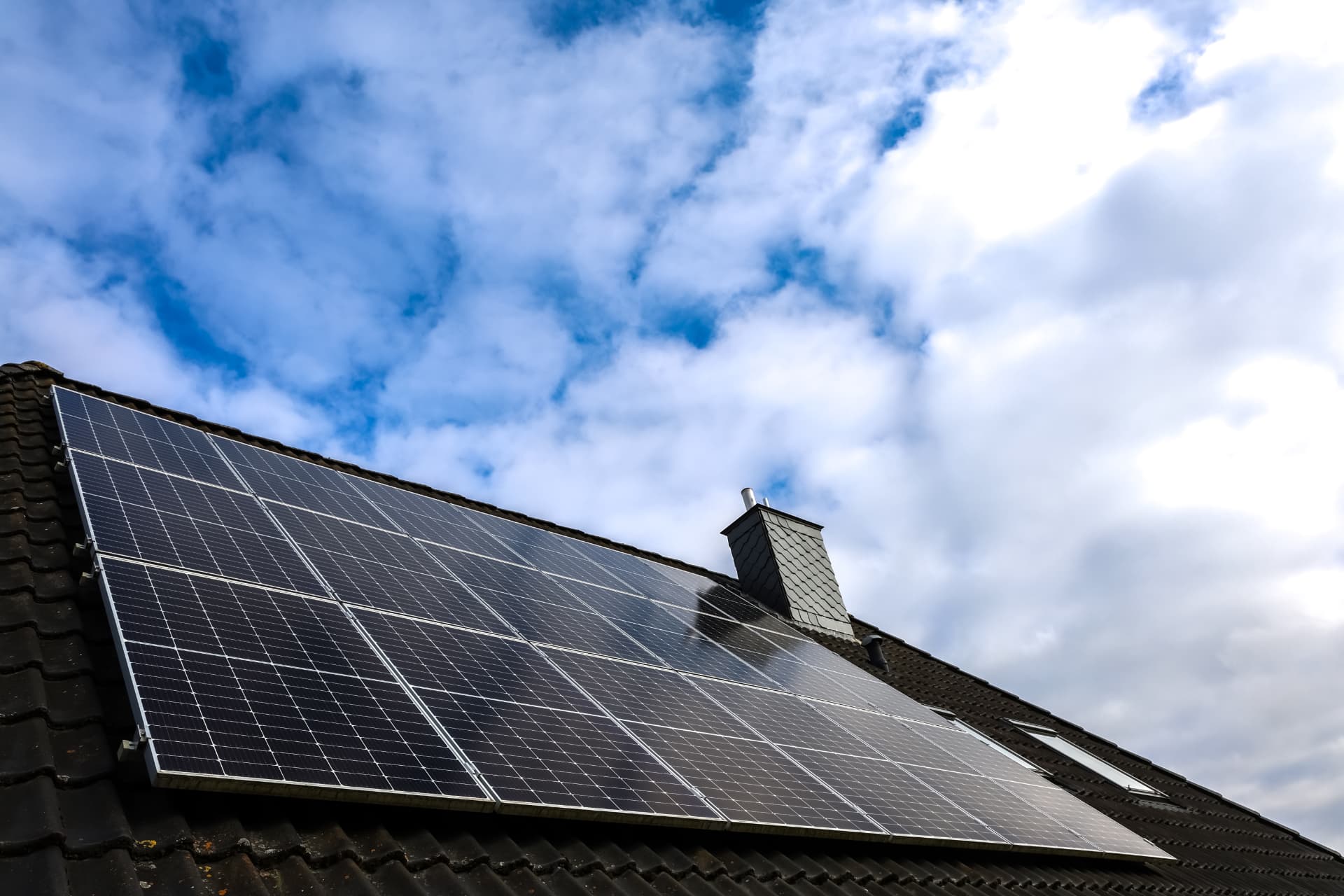
Solar PV turns daylight into electricity your home uses first, before anything is drawn from the grid. Panels on the roof feed a DC supply to an inverter, the inverter converts it to the 230V AC your sockets and appliances run on, and a generation meter records what the array produces. Anything you do not use in that moment is either stored in a battery or exported.
The value of a system is decided long before anyone climbs a ladder. It comes from array sizing, roof orientation, shading, cable routes, inverter selection and the honesty of the survey. An oversized array on a shaded roof produces disappointing numbers for twenty years. A correctly sized array on a clear south or east-west roof quietly covers a large share of daytime consumption from the first week.
Pro-Detect specifies mid-range Fox and Astronergy equipment where budget matters and premium EcoFlow and Aiko equipment where output per square metre matters. Llewys Saunders surveys the property, designs the array, installs it and hands it over: there is no sales layer between you and the person doing the work, and no commission-driven upsell built into the quote.
Who it is for
- Homeowners with a daytime electricity load: home working, heat pumps, EVs, pools, workshops.
- Households on a variable tariff who want to cut what they buy at peak rates.
- Landlords and small commercial sites with steady weekday consumption.
- Anyone re-roofing, extending or rewiring who wants the solar work done at the same time.
When it is needed
- Electricity bills climbing faster than your usage.
- A roof with usable south, east or west aspect and no major shading.
- A planned EV charger, battery or heat pump that will raise your annual demand.
- An existing array that underperforms and needs redesigning rather than patching.
Recent solar pv installation work
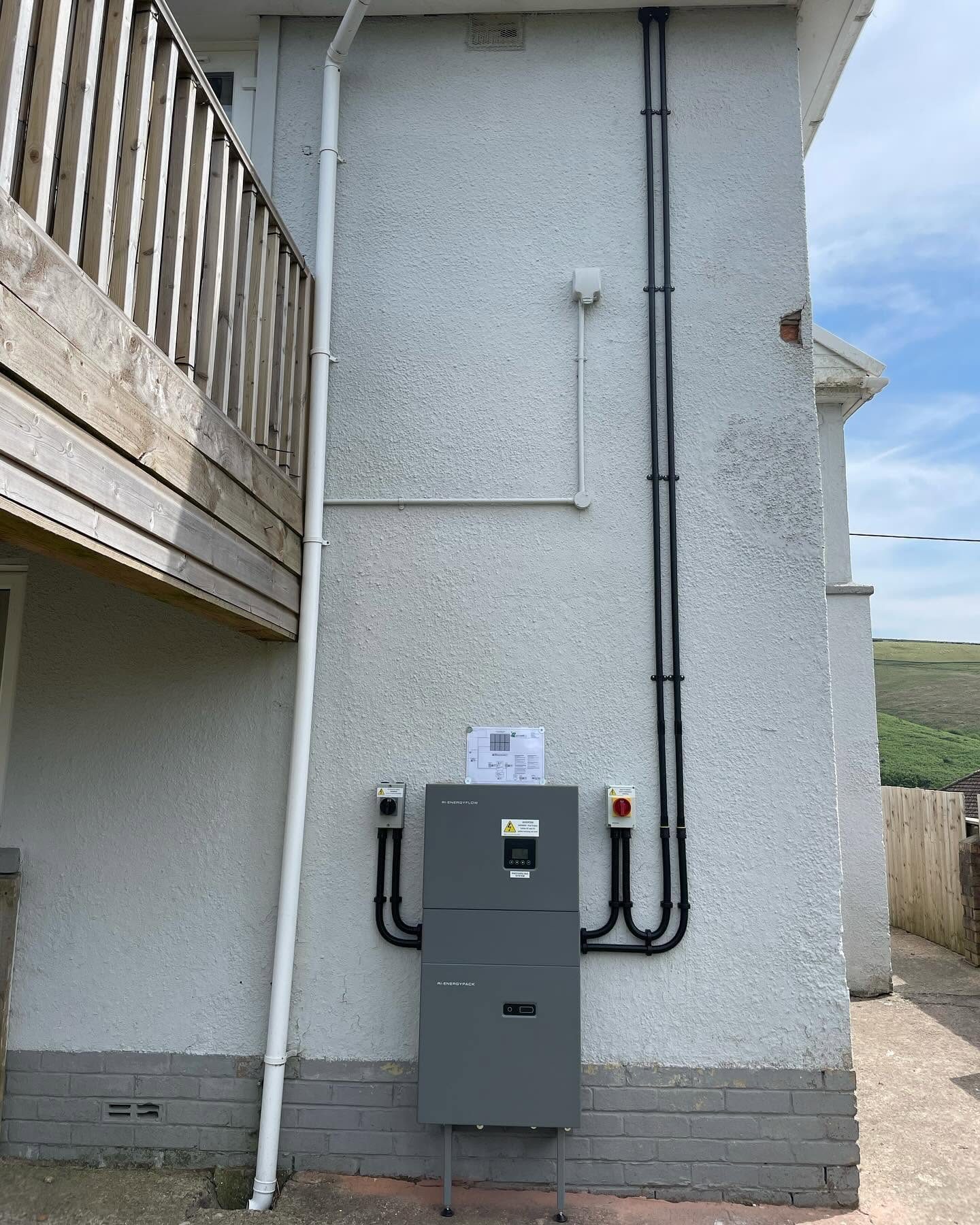
Photographs from jobs we have completed, tested and handed over across Monmouthshire, Newport and Bristol.
See more of our work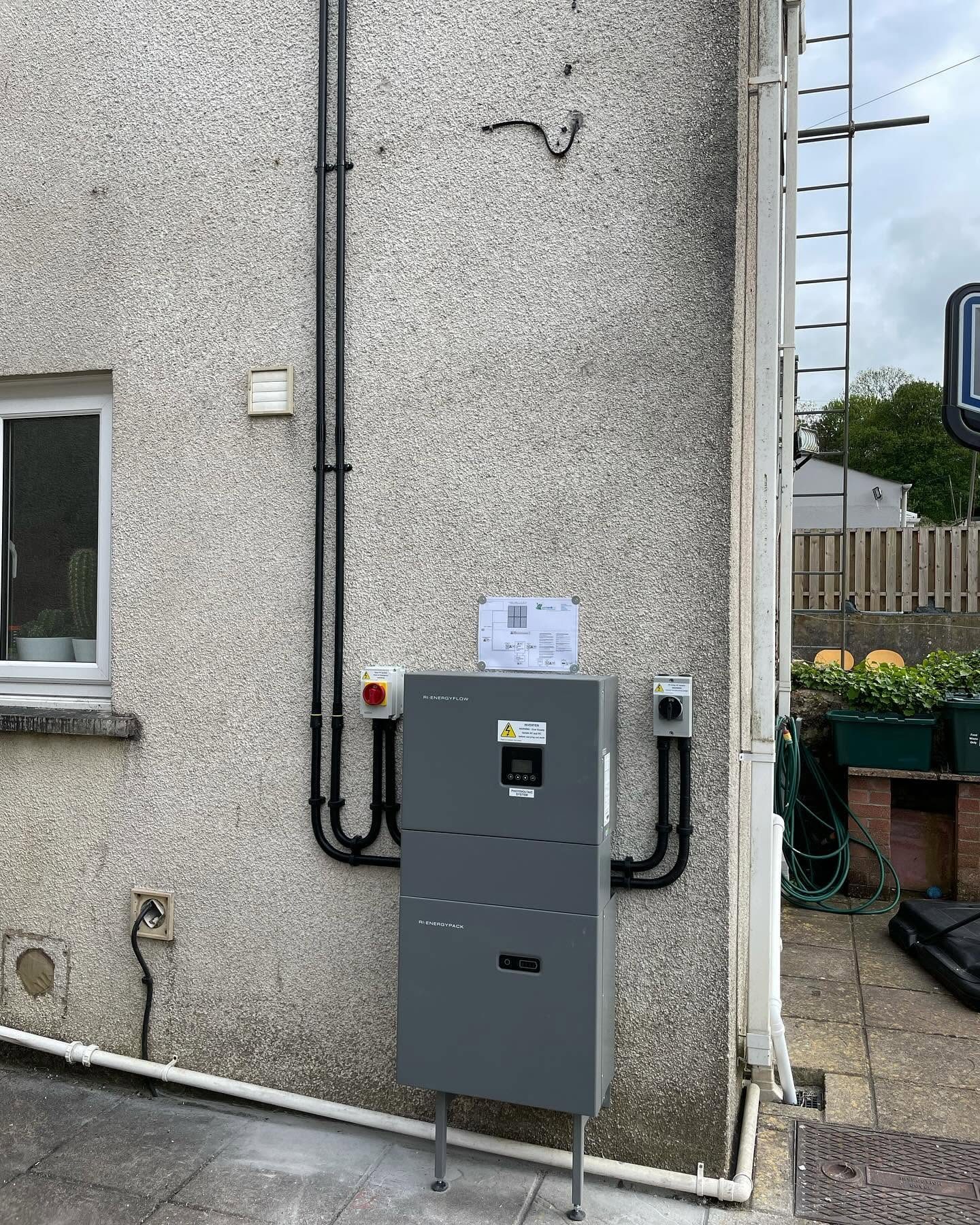
What poor solar work costs you later
Solar is a twenty-five year commitment made in a single day. The consequences of a rushed install are not obvious immediately: they surface as damp, as tripping, as a system that never quite pays back the way the sales figure promised.
Bad roof penetrations leak. Not on the day, but two winters later, into a bedroom ceiling below. Undersized DC cabling wastes yield every hour of every year. An inverter mounted in direct sun in a sealed loft derates in exactly the weather that should be producing your best output. Isolators fitted without weatherproofing corrode and become a fire risk.
The commercial damage is quieter. An array sized to a headline figure rather than your consumption exports most of its output at a low rate while you keep buying at a high one. That gap does not show up on a brochure; it shows up on every bill for the next two decades.
Mistakes we see most often
- Buying on panel count instead of annual consumption in kWh.
- Accepting a design produced from satellite imagery with no roof or loft inspection.
- Ignoring shading from chimneys, dormers and trees that will grow.
- Choosing an inverter with no headroom for a battery you will want in two years.
- Letting a national sales team quote and a rotating subcontractor install.
How the work runs, step by step
The same sequence every time, so you always know what happens next and who is doing it.
Free survey
Roof structure, orientation, shading, loft space, consumer unit condition and cable routes are all checked on site, not estimated from a map.
Design and written quote
You get an array layout, equipment schedule and price in writing within 7 days, with the reasoning behind the sizing set out plainly.
Installation
Scaffold, mounting rails, panels, DC and AC cabling, inverter and isolation, installed to BS 7671 by the team that surveyed the job.
Testing and commissioning
String voltages, insulation resistance, earthing and RCD protection are all tested, and the inverter is commissioned and connected to monitoring.
Handover and aftercare
You are shown the app, the isolation points and the shutdown procedure, and left with the paperwork. We are contactable 24/7 afterwards.
What you get out of it
Bills cut from day one
Every kWh the array supplies is a kWh you do not buy. Self-consumption starts the moment the system is commissioned.
Sized on your usage
The design starts from your annual kWh figure and consumption pattern, not from how many panels will physically fit.
One accountable installer
The person who surveys is the person who installs and the person who answers the phone afterwards.
Battery-ready wiring
Inverter selection and cable routes allow storage to be added later without redoing the AC side.
Weatherproof detailing
Roof penetrations, isolators and external cable runs are detailed for Welsh weather, not for a photo.
Available all year
24 hours a day, 7 days a week, 365 days a year, including after handover.
Solar PV Installation in detail
Panels, mounting and roof types
Most domestic roofs in Caldicot, Rogiet and Chepstow are concrete interlocking tile or slate. Tile roofs take a hook-and-rail system that lifts the tile and transfers load into the rafter, leaving the weather line intact. Slate needs either a slate hook or a replacement flashing plate, because a lifted slate that is not re-supported cracks under wind load.
Flat roofs (garages, extensions, small commercial units) use ballasted or bonded frames set at a shallow tilt. On a flat roof the design constraint is usually wind uplift and roof loading rather than panel count, and the calculation has to be done before the panels are ordered.
Pro-Detect fits mid-range Astronergy and Fox equipment for cost-led projects and premium Aiko and EcoFlow modules where a limited roof area has to yield as much as possible. Aiko modules earn their price on small or awkward roofs where every square metre matters.
Inverters, strings and shading
A string inverter is the right answer on a clean, unshaded roof with a single orientation: fewer components, less to fail, lower cost. Split or east-west arrays need either a dual-MPPT inverter or separate strings, so that morning and afternoon production are tracked independently instead of dragging each other down.
Where a chimney, dormer or neighbouring tree shades part of the array, optimisers on the affected modules stop one shaded panel pulling down the whole string. Fitting optimisers across an unshaded roof is a cost with no return, so they are specified where the survey shows shading and nowhere else.
Inverter siting matters more than most quotes admit. A loft-mounted inverter in an unventilated space runs hot and derates in July. Garage, utility or shaded external wall positions hold output and make future servicing straightforward.
Residential versus commercial installations
Domestic systems are usually single-phase, sized between a few kW and the roof limit, and judged on self-consumption across mornings and evenings. The design question is how much of the household load can be covered before storage becomes the better next spend.
Small commercial sites (workshops, units, farm buildings around Usk, Monmouth and Newport) are frequently three-phase with a weekday load profile that matches solar generation almost perfectly. Self-consumption on those sites can be very high, which changes the economics compared with a house that is empty from nine to five.
Commercial work also brings roof access, working-at-height planning and out-of-hours switching into scope. Because Pro-Detect works 24/7, tie-in work can be scheduled outside trading hours so production is not interrupted.
Solar with batteries, EV charging and heat
Solar and battery storage belong in the same conversation. Without storage, surplus generated at midday is exported; with storage, that surplus runs the evening. Even when a battery is not in the first phase, the install should be wired so it can be added without disturbing the array.
An EV charger changes the picture again. Charging on solar during the day is the cheapest mile you will ever drive, and load management between the charger, the array and the main supply avoids nuisance tripping on a busy consumer unit.
If a heat pump is planned, tell us at survey stage. Heat pump demand is winter-weighted while solar is summer-weighted, and the two together change both the array sizing and the incoming supply assessment.
What we check before quoting
Rafter size and spacing, tile or slate condition, ridge and eaves detail, loft insulation depth and access, the age and rating of the consumer unit, existing earthing arrangement, meter position, and the practical cable route from roof to inverter to board.
Any of those can change the price, and finding them on site rather than on install day is the difference between a quote that holds and a quote that grows. Where remedial electrical work is needed first, such as an old board or a poor earth, it is priced openly rather than discovered halfway through.
Solar PV Installation: your questions answered
How much does solar panel installation cost in Caldicot or Chepstow?
It depends on array size, roof type, access and whether scaffolding and electrical upgrades are needed. The survey is free and the written quote is with you within 7 days, itemised so you can see what each part costs.
How long does an installation take?
A typical domestic array is installed and commissioned within a small number of days on site once scaffold is up. Larger or split-roof systems and commercial jobs take longer, and the schedule is confirmed in the quote.
Will solar work on a north-facing or shaded roof?
North-facing slopes rarely justify the spend. Partial shading is workable with optimisers and sensible string design. If the survey shows the numbers do not stack up, we will say so rather than sell you a system.
Do I need a battery straight away?
No. Many households start with the array and add storage later. We wire and specify the inverter so storage can be added without reworking the installation.
How long do the panels and inverter last?
Panels typically carry a 25-year product warranty and a 30-year linear performance guarantee. Inverters are the shorter-lived part of the system: Fox inverters and batteries carry a 12-year warranty and EcoFlow 15 years. Exact terms for the equipment quoted are set out in your written quote, and our own workmanship guarantee runs for 5 years.
What maintenance does a solar system need?
Very little day to day, but output should be checked, isolators and connections inspected and monitoring reviewed periodically. Pro-Detect offers electrical and solar maintenance for systems we fit and systems we inherit.
Can you fix or extend a system someone else installed?
Yes. We take on remedial work, underperforming arrays and extensions. The first step is a survey to establish what is actually there before anything is quoted.
Are you available outside normal hours?
Yes: 24 hours a day, 7 days a week, 365 days a year. Commercial tie-ins can be scheduled outside trading hours.
Which areas do you cover for solar work?
Caldicot, Rogiet, Magor with Undy, Chepstow, Devauden and Catbrook, Monmouth, Abergavenny, Usk, Newport and Bristol.
Who will actually turn up?
Llewys Saunders and the Pro-Detect team. The person who surveys the job is the person who installs it and the person you call afterwards.
Related services
Where we cover this work
Also covering Rogiet, Magor with Undy, Devauden & Catbrook, Usk and Bristol: see all service areas, read customer reviews or go back to the homepage.
Get solar pv installation priced properly: survey free, quote in 7 days
Llewys Saunders surveys the property, designs the work and installs it. One person accountable from the first call to the final test.
1 Ifton Avenue, Rogiet, NP26 3ST · Open 24 hours a day, 7 days a week, 365 days a year