
Electrical · Fire · Security
Battery Storage Installationacross Monmouthshireand South Wales
Store what your roof generates and run the evening peak on it instead of buying the same units back at the highest rate of the day.
16+ years’ experience · Free survey · Written quote within 7 days · Available 24 hours a day, 365 days a year
16+ years
hands-on electrical and solar experience
24/7, 365
available every day of the year
Free survey
written quote back within 7 days
Fully insured
owner-led work, tested and certificated
Reviewed locally
rated by customers across Monmouthshire
What battery storage does and who benefits from it
A home battery sits between your solar array, your grid supply and your consumer unit. Surplus generation that would otherwise be exported is captured during the day and released when the house is actually busy: cooking, heating, showers, television, charging. On a time-of-use tariff the same battery can also be filled overnight at a low rate and discharged through the expensive part of the evening.
The decision is not really about kilowatt hours on a spec sheet. It is about your evening load, your export pattern and your tariff. A battery sized far above your daily surplus never fills and never pays; one sized far below it exports the difference anyway. The right capacity is the one that clears your typical daily surplus and covers your peak window.
Pro-Detect installs storage alongside new solar and retrofits it to existing arrays, including arrays installed by other companies. Fox and Astronergy equipment covers mid-range projects; EcoFlow suits households that want modular capacity and a straightforward app. The survey establishes what you already have before anything is specified.
Who it is for
- Solar owners exporting a large share of what they generate.
- Households on time-of-use or agile-style tariffs with a costly evening window.
- Homes with EVs, heat pumps or electric heating and a heavy evening load.
- Properties on a weak or unreliable supply that want backup for essential circuits.
When it is needed
- Your generation figures look good but your bills have not moved much.
- Most of your consumption happens after the array stops producing.
- You are adding an EV charger or heat pump and expect demand to rise.
- You are installing solar now and want the storage designed in from the start.
Recent battery storage work
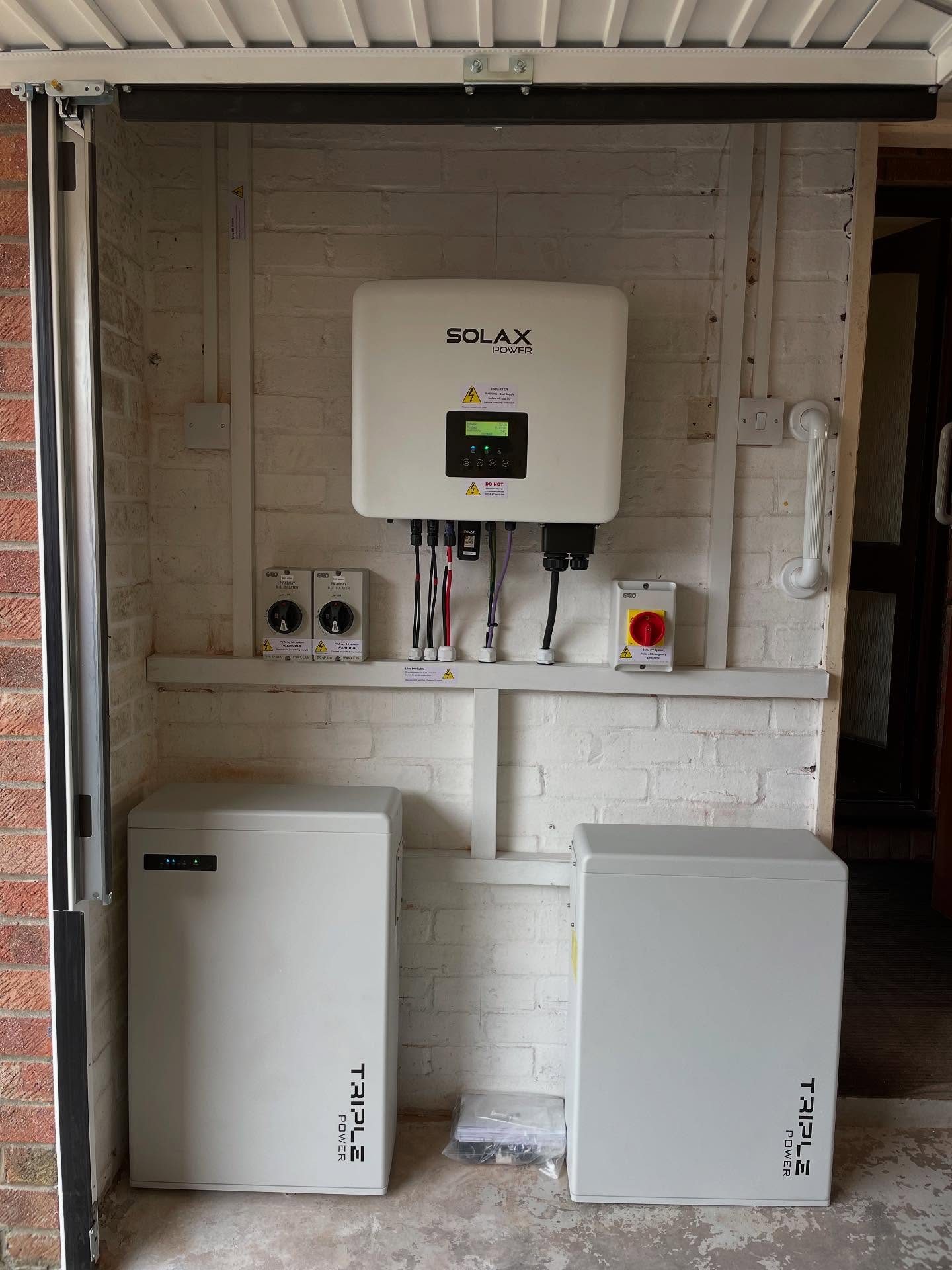
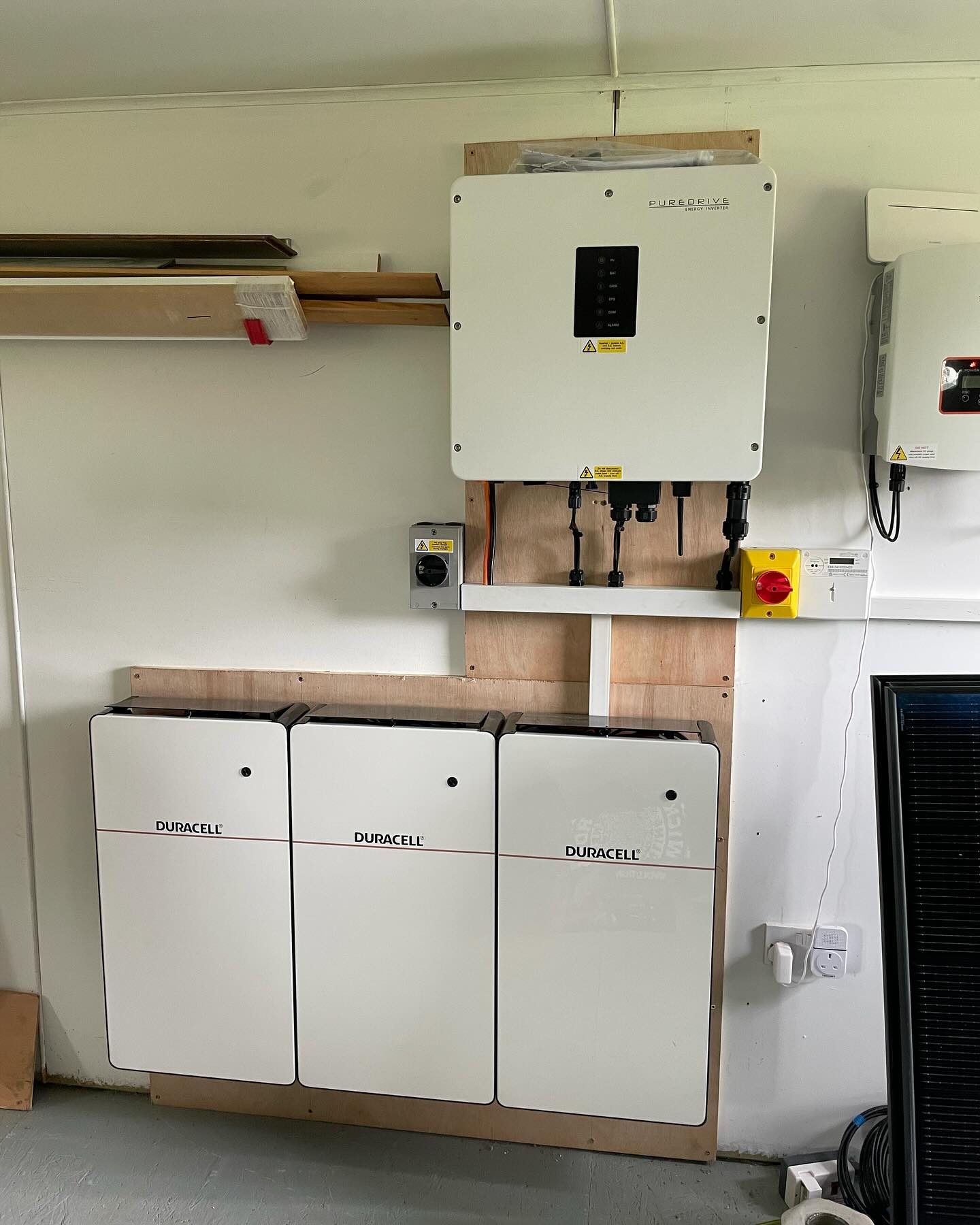
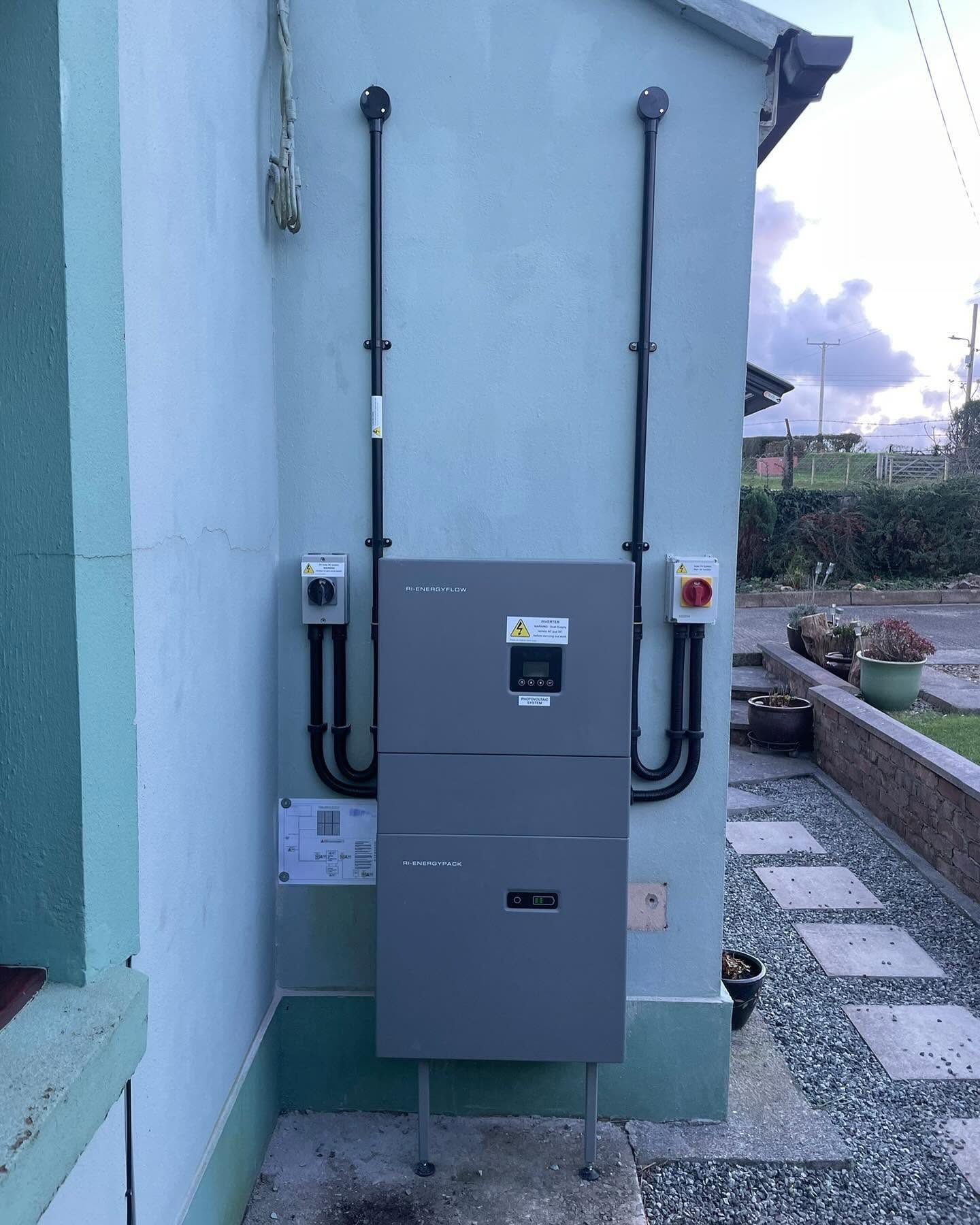
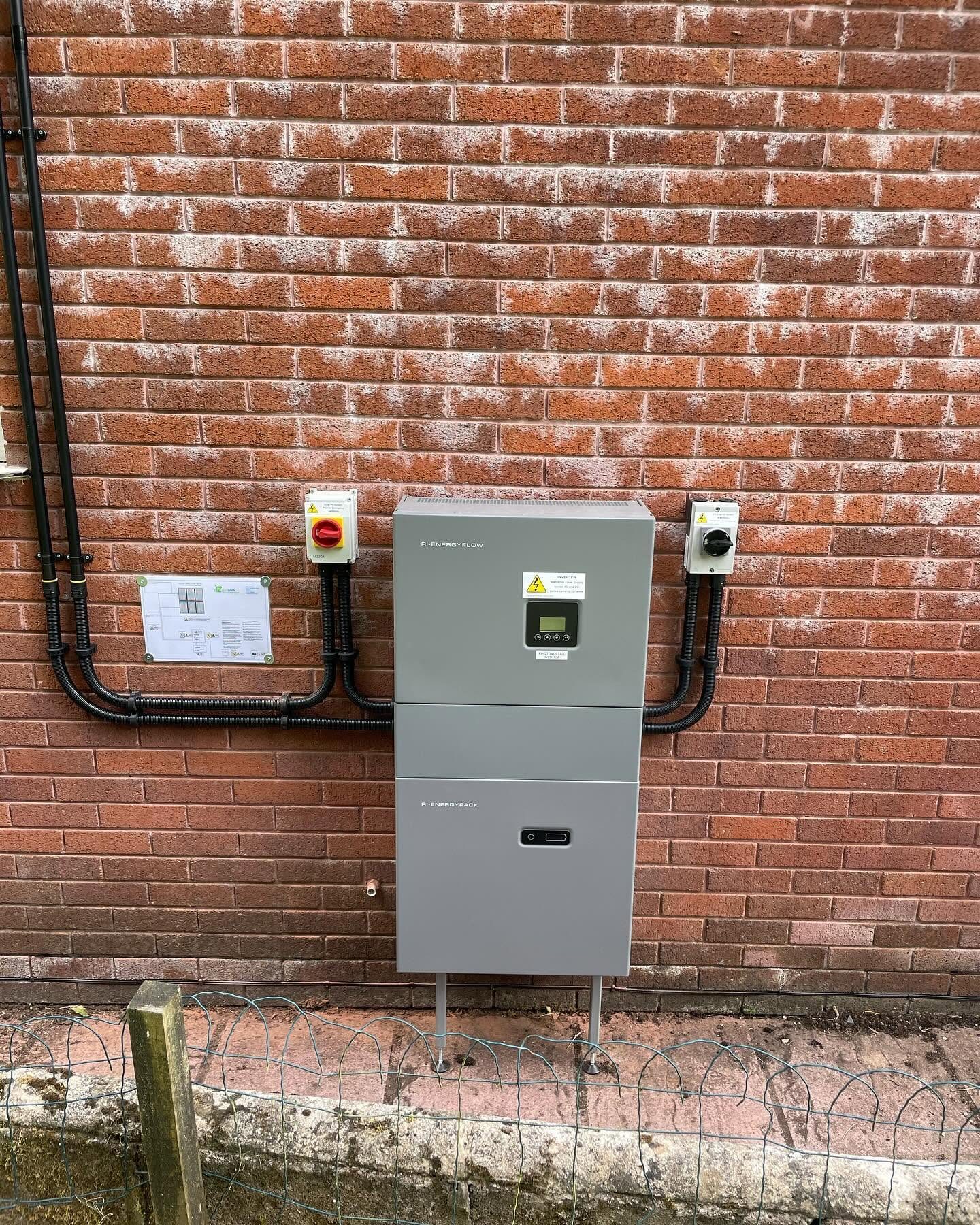
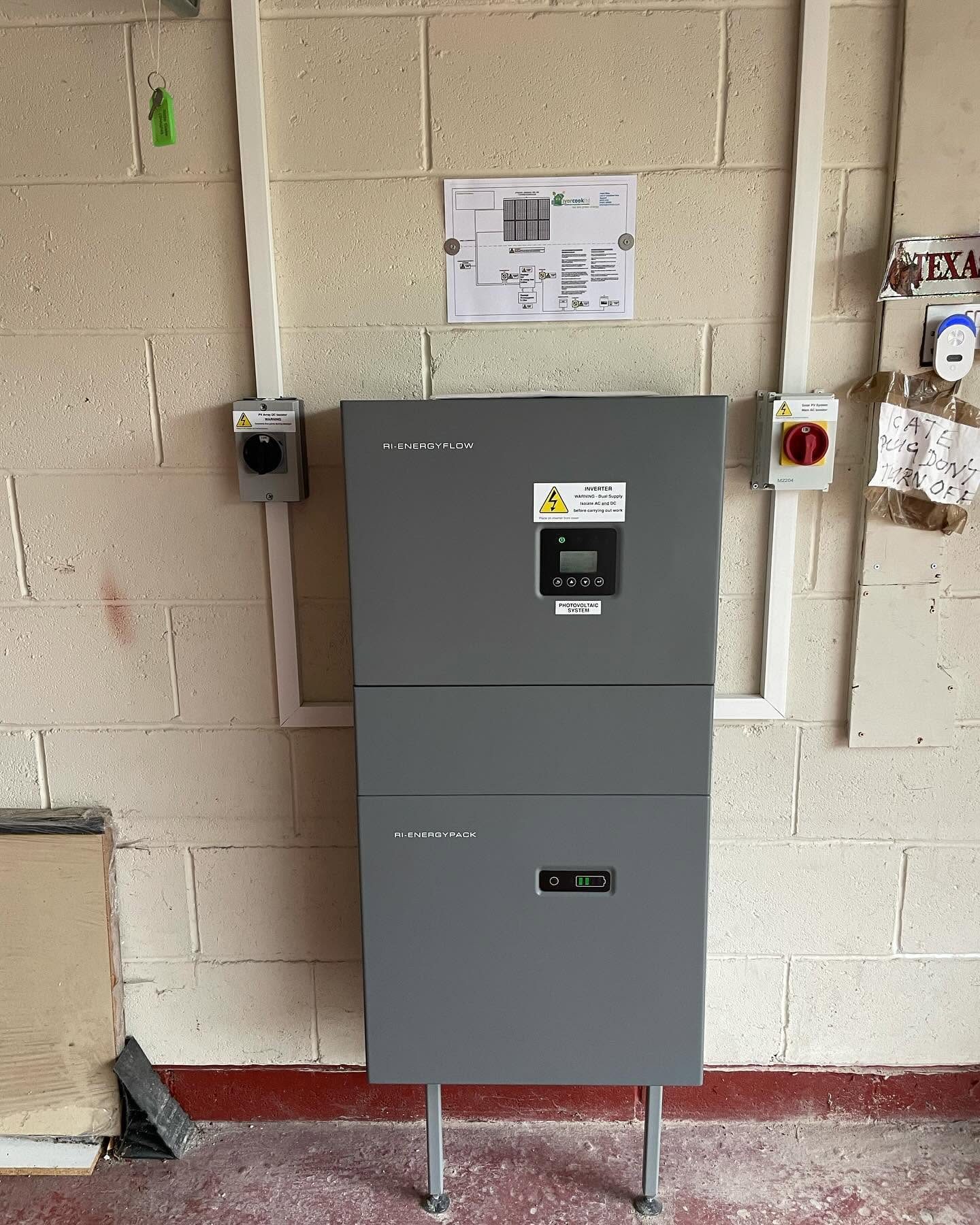
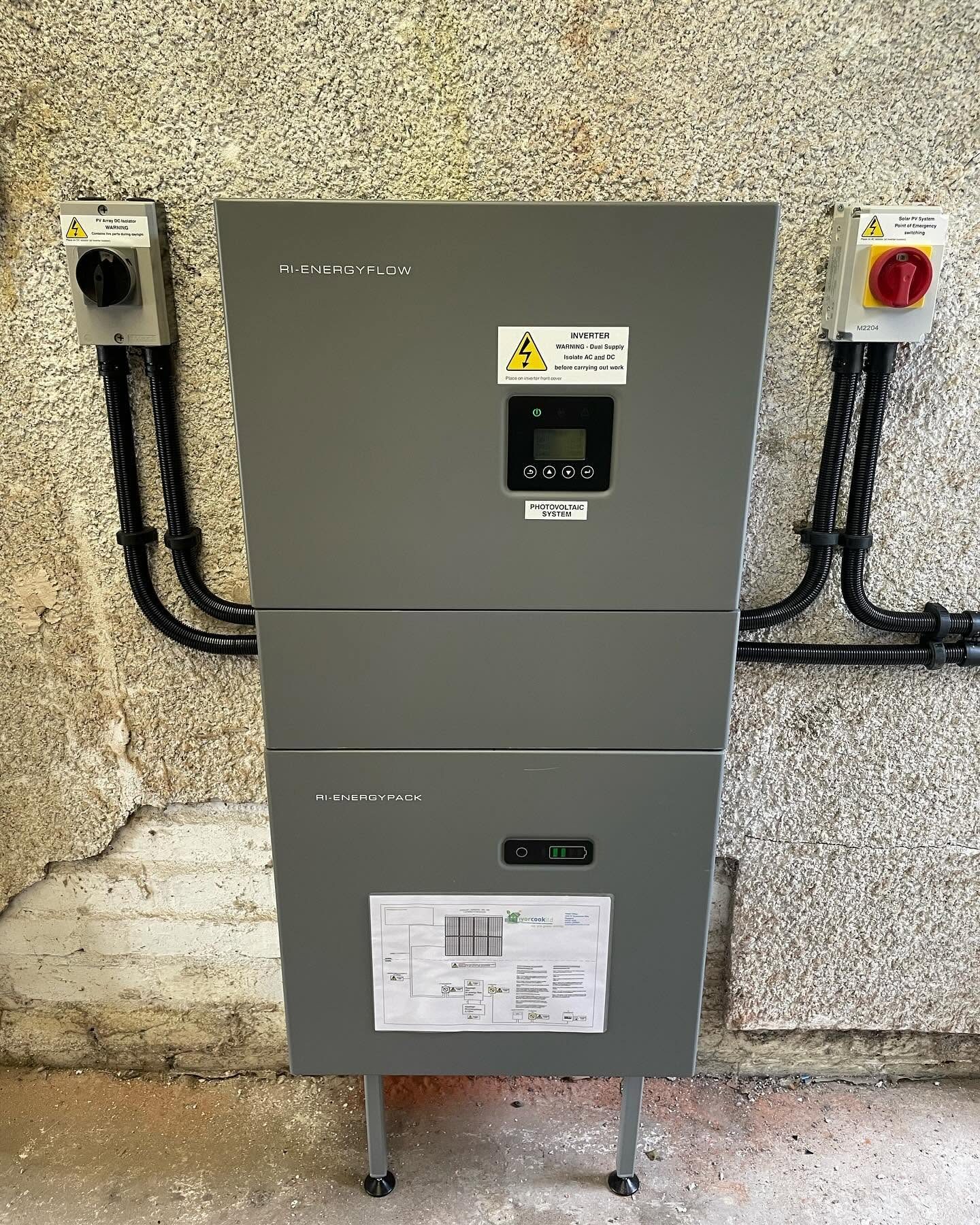
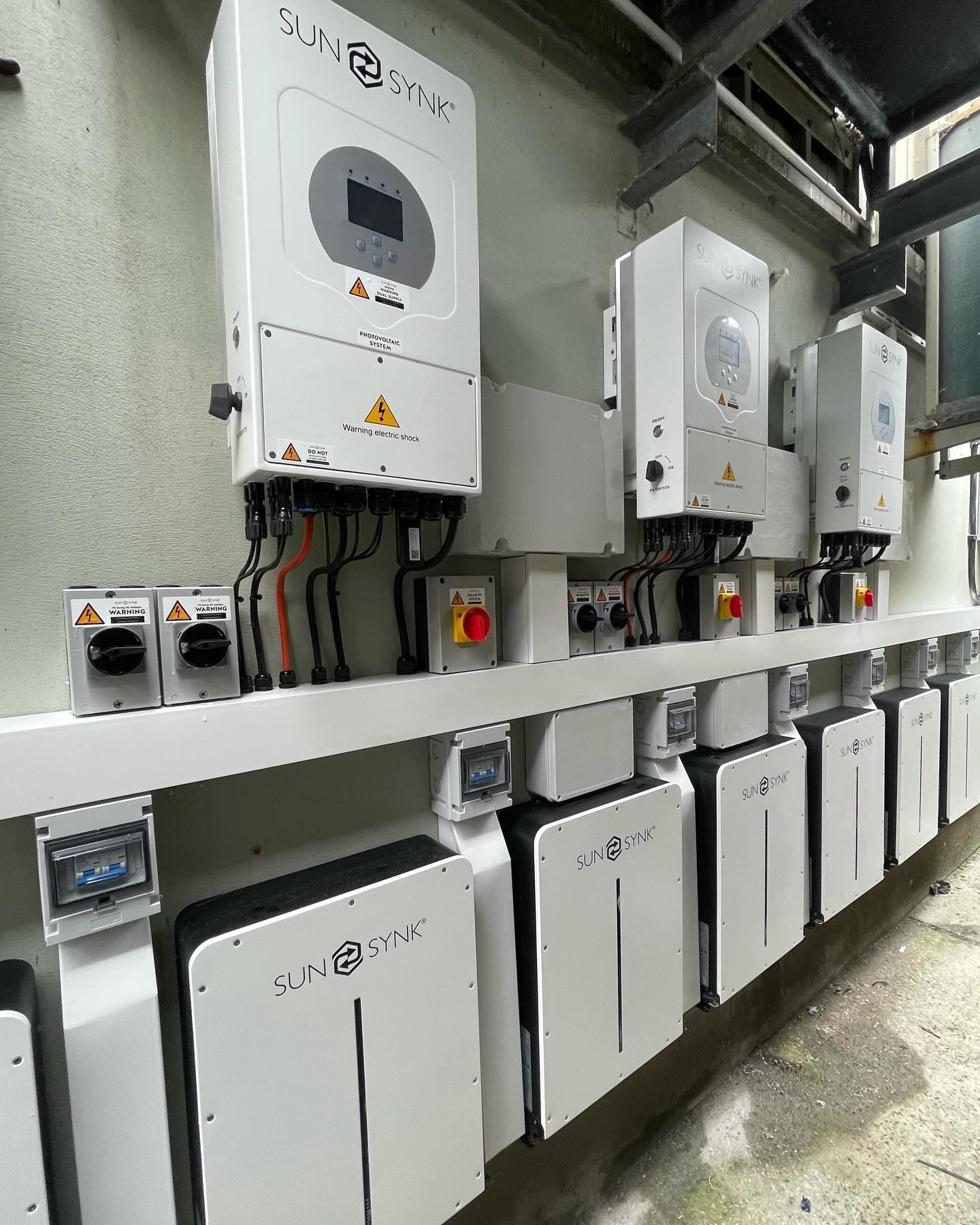
Photographs from jobs we have completed, tested and handed over across Monmouthshire, Newport and Bristol.
See more of our work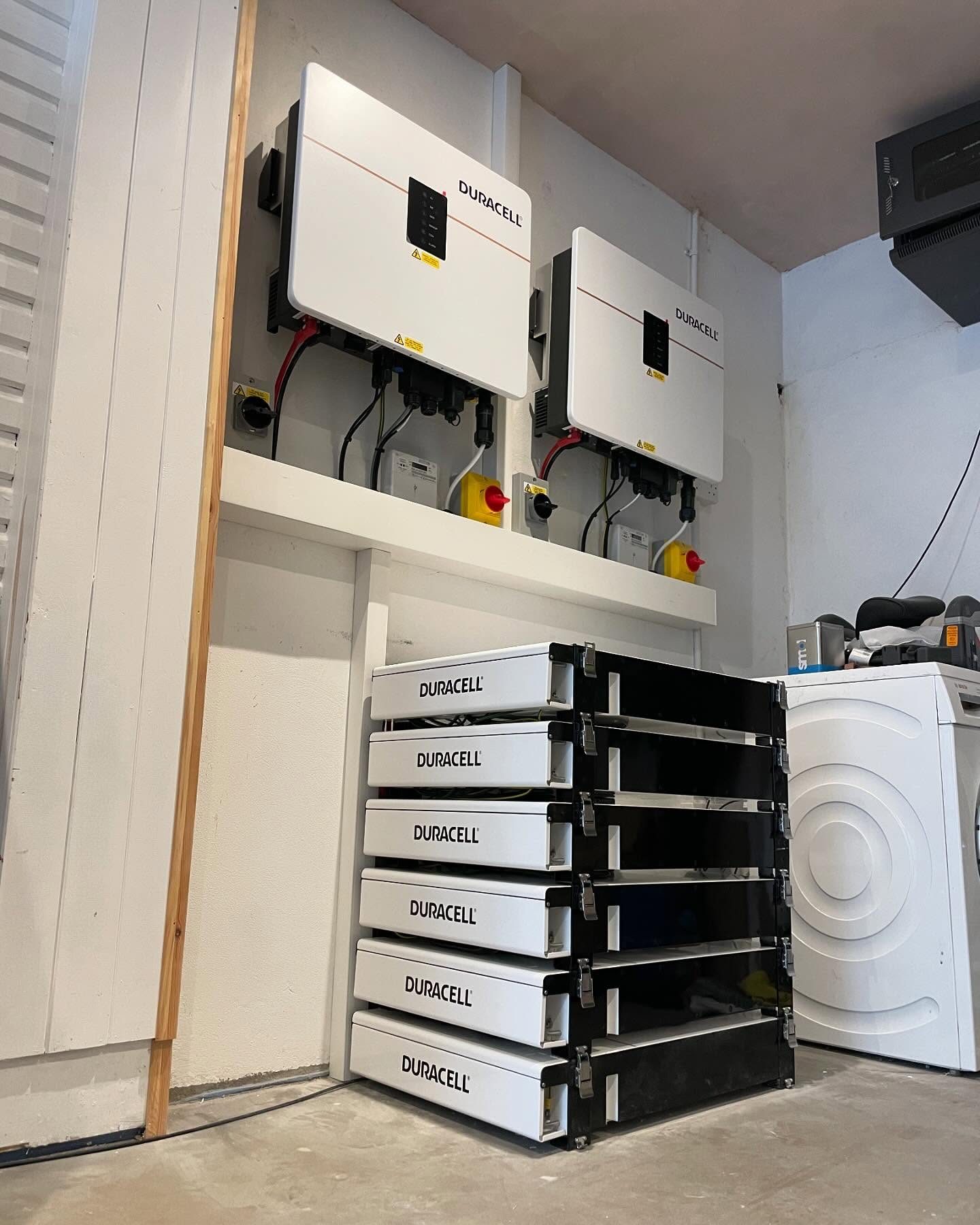
The cost of getting storage wrong
Battery storage is the part of a system most often oversold and least often measured. Capacity bought without reference to a household's real surplus sits half-used for its whole service life, and the payback that justified the purchase never arrives.
There are safety consequences too. Lithium storage needs correct location, ventilation, fixing, isolation and clear labelling. Batteries mounted in unsuitable spaces, wired without proper DC protection or installed without a documented shutdown procedure create a hazard for you and for anyone attending the property in an emergency.
Retrofits carry a particular trap: bolting storage onto an existing array without checking the inverter, the earthing arrangement or the incoming supply. If the electrical infrastructure is not right, the battery either underperforms, trips repeatedly, or exposes existing faults nobody has looked at in years.
Mistakes we see most often
- Buying capacity on price per kWh without checking daily surplus.
- Fitting storage to an array whose inverter cannot support it properly.
- Locating a battery in an unventilated or heat-affected space.
- Skipping the tariff conversation, so the battery never charges cheaply.
- Assuming a battery means whole-house backup; most do not, unless designed for it.
How the work runs, step by step
The same sequence every time, so you always know what happens next and who is doing it.
Free survey and usage review
We look at your consumption, generation data if you have it, tariff, existing inverter and the spaces available for the battery.
Sizing and written quote
Capacity, equipment, location and any electrical remedial work are set out in a written quote with you within 7 days.
Installation
Battery mounted and secured, DC and AC protection fitted, isolation and labelling installed, and the system integrated with your existing board to BS 7671.
Commissioning and testing
Charge and discharge cycles verified, protection tested, schedules configured to your tariff and monitoring connected.
Handover and aftercare
You are shown the app, the charge schedule and the isolation procedure, and we stay reachable 24/7 if anything needs adjusting.
What you get out of it
Cheaper evenings
The expensive hours run on stored energy instead of imported units at peak rate.
More of your own generation used
Surplus that used to be exported at a low rate now offsets what you would have bought at a high one.
Tariff flexibility
Charge schedules can be set to exploit off-peak windows and adjusted if you switch tariff.
Backup where it is designed in
Where the specification supports it, essential circuits can keep running through a power cut.
Retrofit friendly
Storage can be added to existing arrays, including systems installed by other companies.
Safe, documented installation
Correct location, protection, labelling and a shutdown procedure you actually understand.
Battery Storage in detail
AC-coupled and DC-coupled storage
DC-coupled storage connects on the panel side of a hybrid inverter. It is the more efficient route when solar and battery are installed together, because generation goes to the battery without an extra conversion step.
AC-coupled storage has its own inverter and connects on the mains side. It is usually the right answer for a retrofit, because the existing solar inverter stays exactly as it is and the battery is added alongside rather than replacing working equipment.
Which one suits you depends on what is already installed. On a new build-out we usually specify a hybrid inverter from the start; on a five-year-old array with a healthy string inverter, AC coupling avoids throwing away good equipment.
Sizing, cycles and service life
Sizing starts with two numbers: how many kWh you use in a typical evening, and how many surplus kWh your array produces on a typical good day. Capacity that comfortably clears both, with a little headroom for winter and future load, is the sensible target.
Modern lithium iron phosphate cells are rated for a long cycle life and cope well with the daily full-ish cycle a solar household puts them through. Warranty terms differ by manufacturer and are quoted for the exact equipment specified rather than described in general terms.
Depth of discharge, ambient temperature and charge rate all affect longevity. A battery in a cold garage behaves differently from one in a warm utility room, and the schedule is set with that in mind.
Location, ventilation and safety
Batteries need a solid substrate, adequate ventilation, protection from direct sun and temperature extremes, and space for service access. Garages, utility rooms, plant rooms and shaded external walls with the correct IP-rated equipment all work; unventilated loft spaces and escape routes generally do not.
DC isolation, correctly rated protective devices, cable containment and clear labelling are all part of the installation, along with an emergency shutdown procedure explained at handover and left on site in writing.
Commercial and larger-scale storage
Workshops, small industrial units and farm buildings around Usk, Monmouth, Newport and Bristol often carry a demand profile with sharp, predictable peaks. Storage there is about shaving those peaks and holding production through short supply interruptions as much as it is about tariff arbitrage.
Three-phase sites need phase-balanced design and, frequently, out-of-hours switching for the tie-in. Working 24/7 means that work can be scheduled around your trading hours rather than through them.
Battery Storage: your questions answered
How much does battery storage cost?
It varies with capacity, whether an inverter is included, the mounting location and any electrical work needed first. The survey is free and the itemised written quote reaches you within 7 days.
Can I add a battery to solar panels I already have?
Yes. AC-coupled storage retrofits alongside an existing array, including arrays installed by other companies. We survey what is there before specifying anything.
Will a battery keep my house running in a power cut?
Only if backup is designed into the specification. Many standard installations shut down with the grid for safety. Tell us at survey stage if backup matters and we will design for it.
What size battery do I need?
Enough to clear your typical daily solar surplus and cover your evening load, with modest headroom. That figure comes from your usage, not from a standard package.
How long does installation take?
A straightforward domestic retrofit is usually a single-day job on site. Systems installed alongside a new array are commissioned as part of that install.
Do batteries need servicing?
They need periodic checks of connections, protection, firmware and performance rather than routine mechanical servicing. Our maintenance service covers this.
Is a battery worth it without solar?
It can be on a tariff with a genuinely cheap off-peak window, because you charge overnight and discharge at peak. We will run the logic honestly with you at survey.
How long will a battery last?
Cycle life is measured in thousands of cycles for current lithium iron phosphate equipment. Fox inverters and batteries carry a 12-year warranty and EcoFlow 15 years, with the exact terms for the product specified stated in your written quote.
Which areas do you install storage in?
Caldicot, Rogiet, Magor with Undy, Chepstow, Devauden and Catbrook, Monmouth, Abergavenny, Usk, Newport and Bristol.
Can you work outside business hours?
Yes. Pro-Detect operates 24 hours a day, 7 days a week, 365 days a year.
Related services
Where we cover this work
Also covering Rogiet, Magor with Undy, Devauden & Catbrook, Usk and Bristol: see all service areas, read customer reviews or go back to the homepage.
Get battery storage priced properly: survey free, quote in 7 days
Llewys Saunders surveys the property, designs the work and installs it. One person accountable from the first call to the final test.
1 Ifton Avenue, Rogiet, NP26 3ST · Open 24 hours a day, 7 days a week, 365 days a year